


Knowledge · Technique · Craft
What is Mokume Gane?
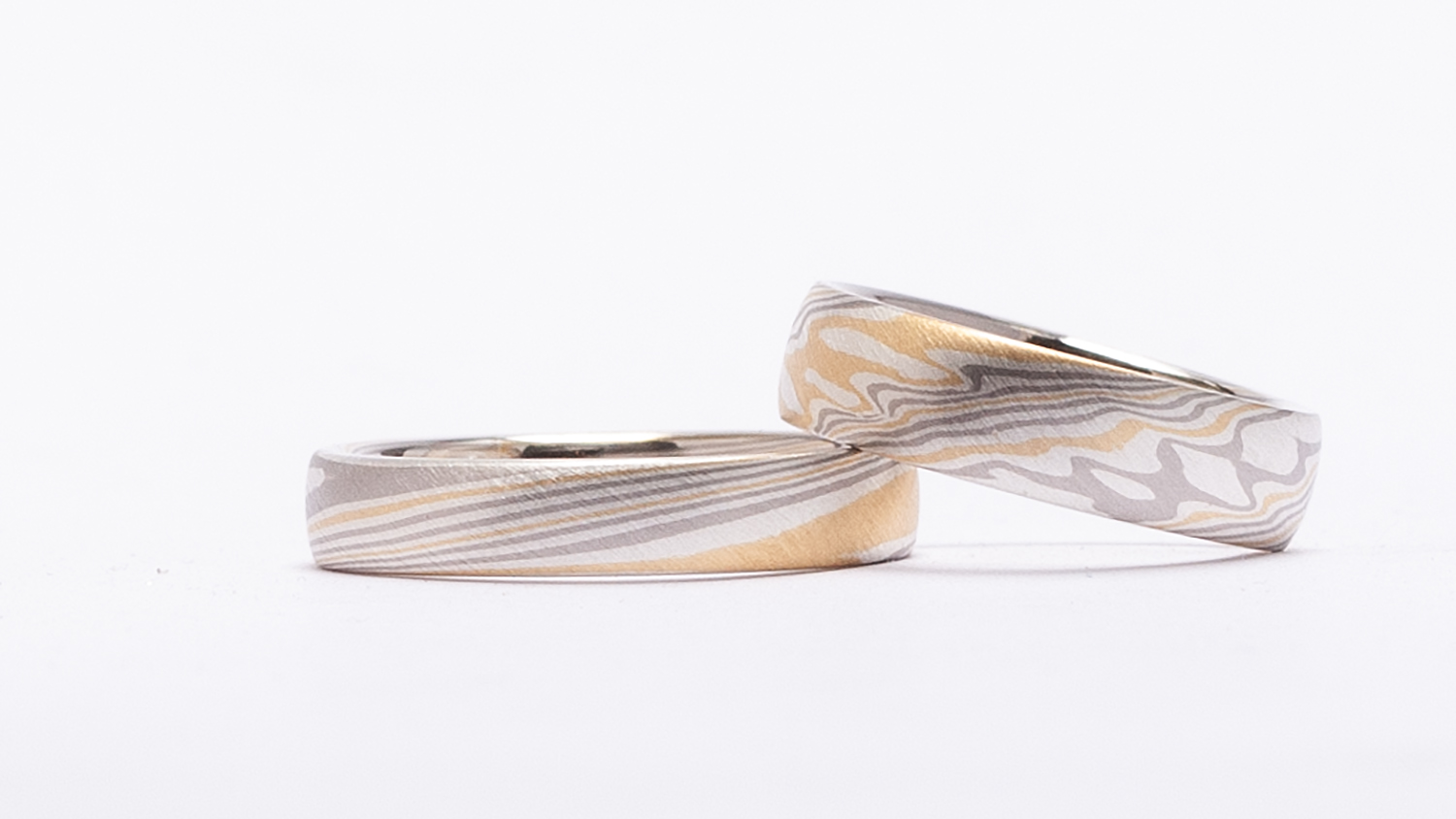
Many layers of metal, permanently bonded and worked to reveal a living grain.
Mokume Gane translates roughly as “wood grain metal”. The Japanese technique joins different precious metals into a single material. Its colours and patterns are not a coating; they run through the metal itself.
From sheet to ring
How the layered material is made.
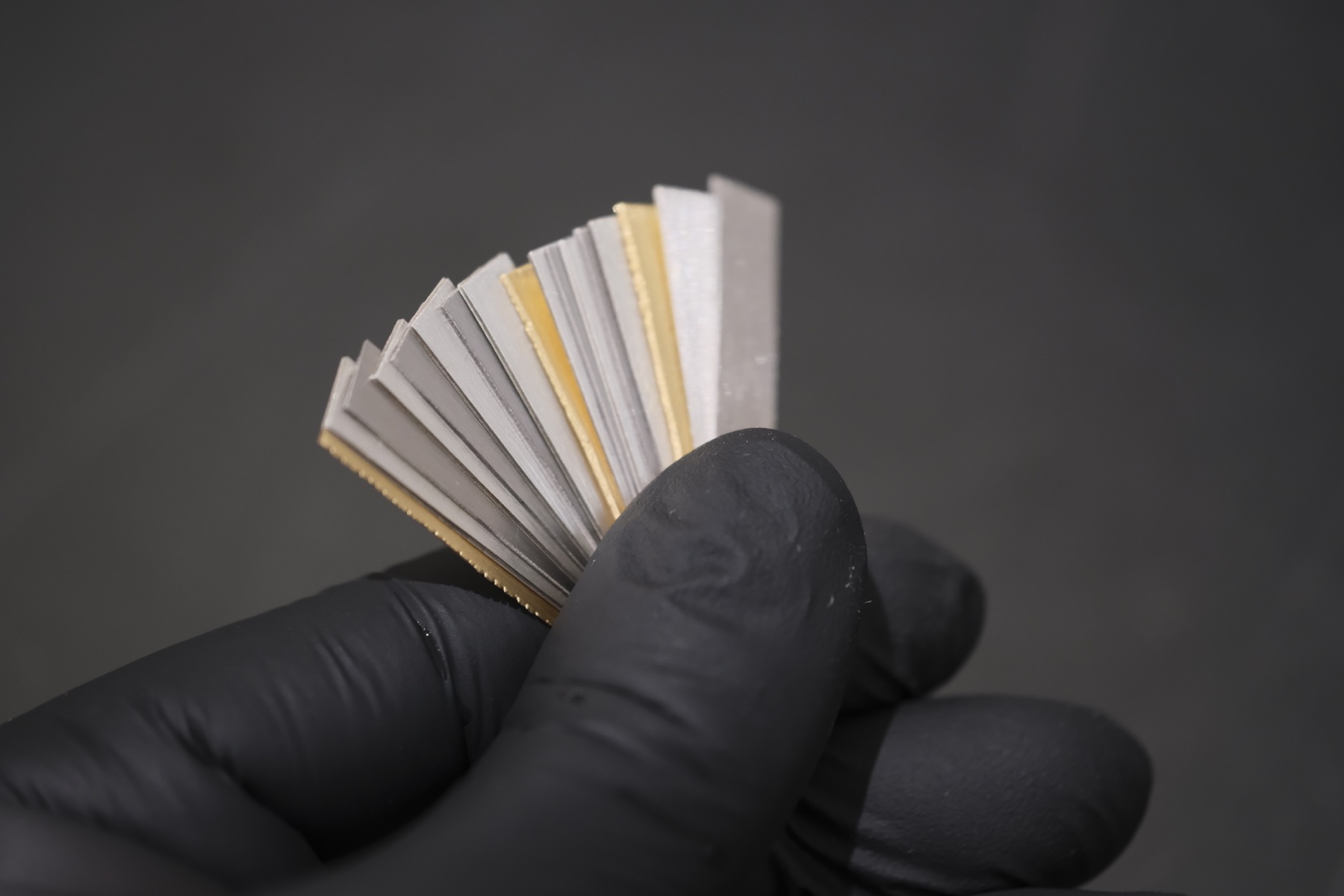
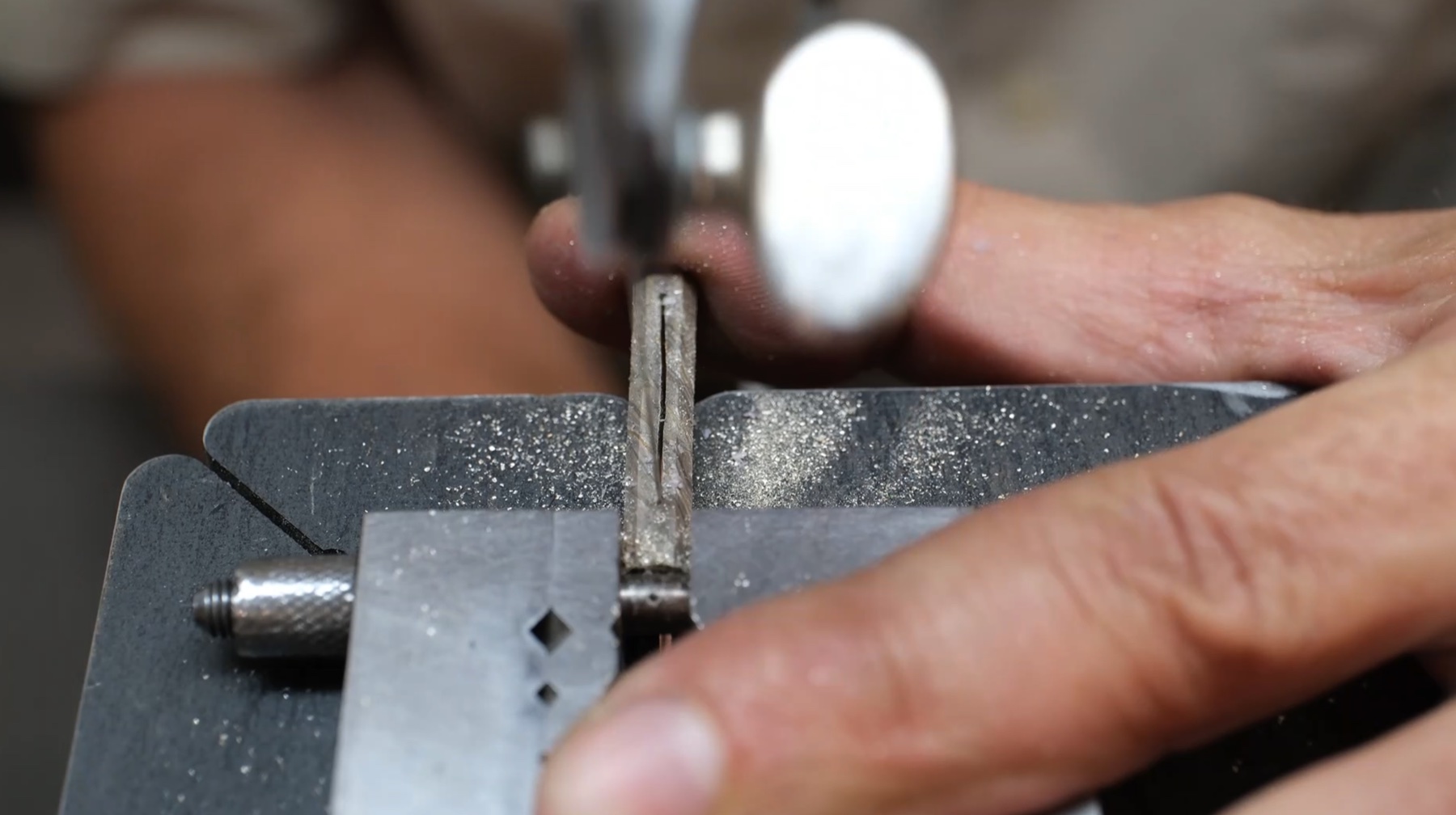
Thin sheets of different precious metals are stacked and permanently bonded under controlled heat and high pressure. Forging, rolling, sawing, drilling, milling and twisting then develop the pattern within the billet.
Layering
Selected precious-metal sheets are stacked in a defined sequence.
Bonding
Heat and pressure join the layers into a durable metal composite.
Developing the pattern
Twisting and controlled removal reveal the individual layers.
Rolling
The patterned billet is consolidated again and rolled to the required dimensions.
Forming
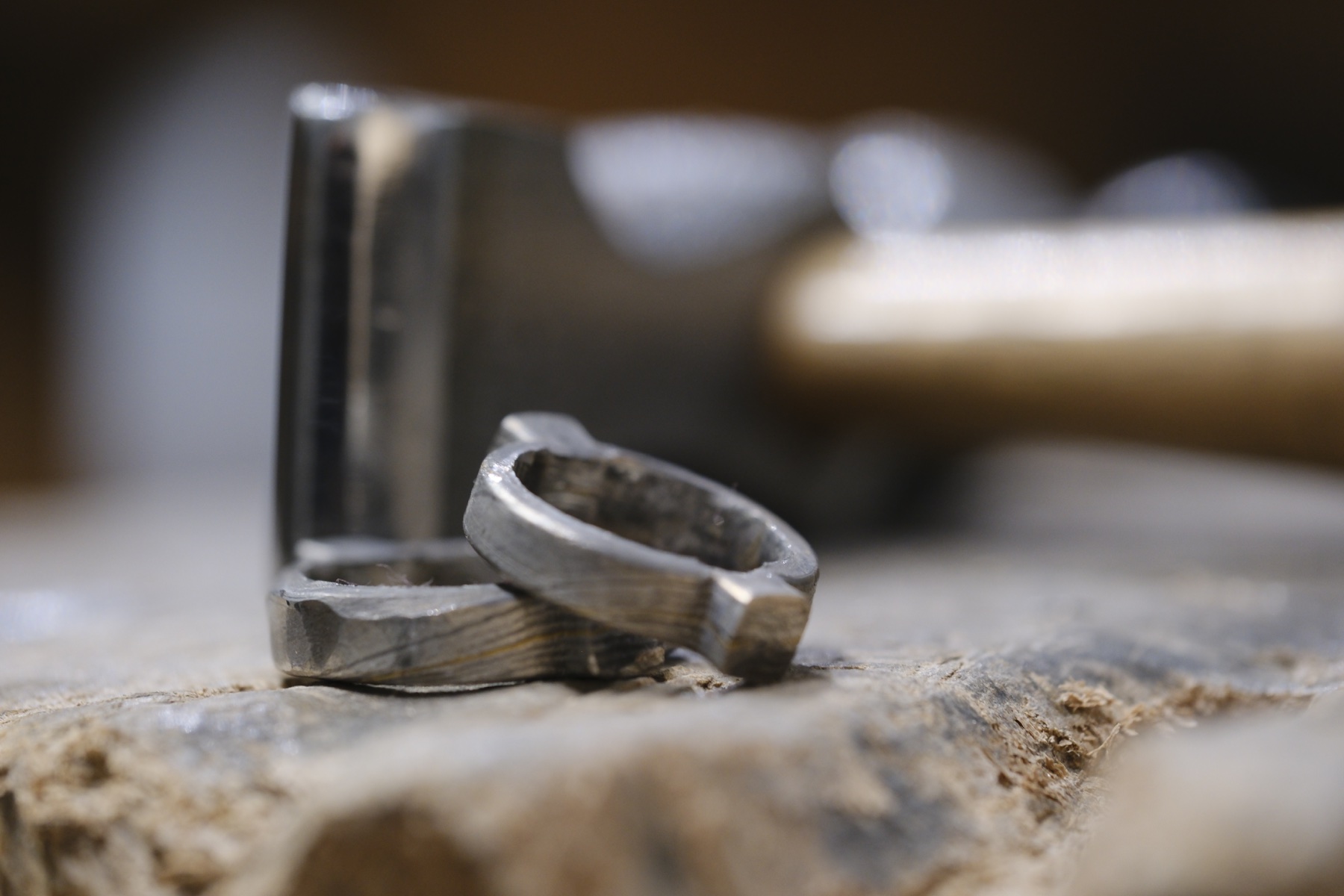
The prepared material becomes a ring with a pattern of its own.
Construction
Seamless or joined?
Both methods are sound craftsmanship. The choice primarily affects the flow of the pattern, material use and design.

Seamless
The ring is worked from the material without a welded joint. Its grain continues around the entire ring. This requires more material and additional work, and the resulting pattern is often calmer.

With a joint
A prepared strip is formed into a ring and permanently welded. Material can be used more efficiently and lively patterns are easier to control. The grain may be interrupted at the joint.
A visible interruption in the pattern is not a quality defect. What matters is a carefully made composite and a professionally executed joint.
Workshop
Seamless making in motion.
These two short workshop sequences show how a seamless ring blank is forged and then brought to size.
Pattern development
How twisting changes the pattern.
During torsion, the elongated layered material is twisted around its axis. The number and degree of twists determine the angles, spacing and rhythm of the visible metal layers.
 1× twist · calmer grain
 2× twist · stronger movement
 3× twist · denser rhythm
In brief
Frequently asked questions
Which metals can be combined?
The combination is chosen according to colour, contrast, technical properties and the intended design. MVH frequently works with gold alloys, palladium, platinum and silver.
Is every pattern identical?
No. The selected layering and working method define its direction, but the exact grain develops within the material. No two rings are exactly alike.
Can the rings be laser engraved?
Yes. Names, dates, handwriting, symbols and many personal designs can be engraved precisely on the inside or, depending on the design, on the outside. Laser engraving is included in the price of MVH wedding rings.
Can the ring size be changed later?
Yes, many Mokume Gane rings can be resized. The appropriate method depends on the ring construction, pattern, metal combination and extent of the alteration, and is assessed on the individual ring.
Can existing customer gold be used?
As a rule, customer gold cannot be incorporated directly into a Mokume Gane billet. Exceptions may be possible in individual cases and must be discussed beforehand. Existing precious metal can also be credited independently of this.
Technical responsibility
Michael Andrés von Hobe
A Mokume Gane specialist since 2003. This information is based on his practical work with Mokume Gane in the MVH Schmuckwerk studio in Berlin.
Models and bespoke work
Mokume Gane wedding rings.
Explore materials, patterns and current models, or discuss a bespoke commission.